
Whoa. You open Solscan and there’s this immediate clarity. Short menus. Fast searches. Not flashy, but it works. My first reaction was: “Finally, an explorer that gets out of the way.” It’s snappy. It’s precise. And for folks chasing NFT drops or debugging program interactions, that matters a lot—latency and clarity are everything.
Okay, so check this out—I’ve spent enough late nights tracing transactions to know what I want from an explorer. I want readable instruction decodes, token metadata that doesn’t lie to me, and a way to quickly answer: who minted this, when, and what happened to it since? Solscan gives you that. Initially I thought all explorers were pretty much the same, but that was naive. Actually, wait—Solscan’s UX and search primitives change how you approach on-chain sleuthing. On one hand you get copy-paste-ready fields; on the other, you get deep dives into program logs when things go sideways. My instinct said, use the explorer first, panic later.
Here’s the practical bit. Need to inspect a transaction? Paste the signature and you’ll see decoded instructions, fees, blocks, and program logs. Want to look at an NFT? Punch in the mint address and you’ll get metadata, holders, recent sales and transfers, and the token’s JSON link when it’s available. You can trace token flows across wallets, which is great when you’re tracking airdrops or suspicious transfers.
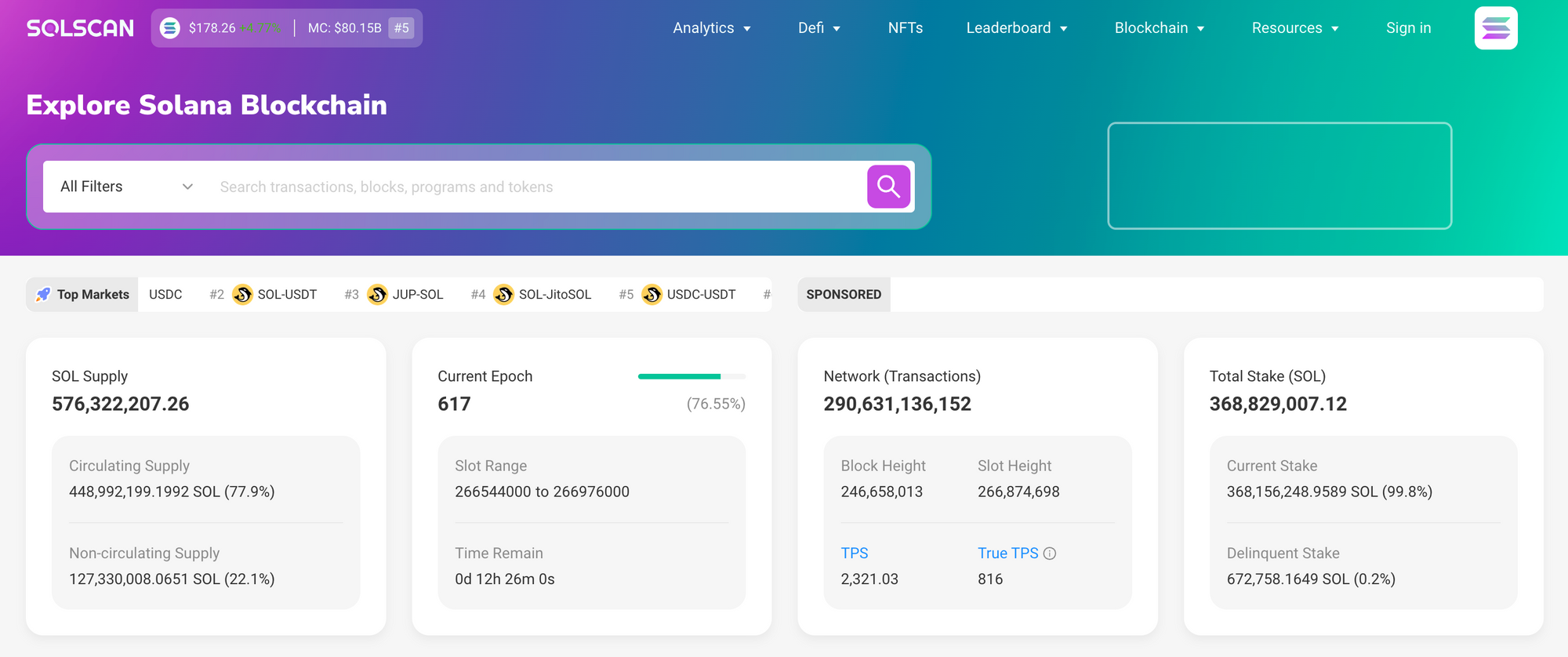
Official resource and quick reference
If you want to start from a trusted page, try the official Solscan link: https://sites.google.com/cryptowalletextensionus.com/solscan-explorer-official-site/
Things that stand out to me—practically and emotionally. First, the program logs. When a transaction fails, dumps of the runtime stack and logs are often the only way to figure out whether it was a bad instruction, insufficient funds, or a serialization error. Seriously, those logs have saved me from blaming wallets when the program was the real culprit. The instruction decoder is also useful; it translates raw bytes into human-readable actions so you can tell who called what, and with which parameters.
For NFT collectors, the collection pages are small goldmines. They show floor price distribution, recent transfers, and holder concentration. You can see whether a collection is tightly held by a single whale or widely distributed. That’s the sort of nuance you won’t notice at a glance on some generic marketplaces. It helps you make smarter bids, or avoid bad ones—because honestly, that part bugs me: people often buy into liquidity illusions without checking holders.
Another useful feature: wallet analytics. Want to audit a suspicious wallet? Solscan surfaces token balances, staking positions, SOL balance history and transaction counts in a clean layout. Combined with the token transfer graph, it’s straightforward to spot wash trading or coordinated movements. There are limits—on-chain data can only tell you so much—but it narrows the field.
Now, some practical tips I use all the time: when you see an unknown token in a wallet, click the token mint, then check the token’s metadata link in Solscan. If the JSON URL is empty or points to a suspect domain, pause. If the metadata claims an IPFS link, resolve it independently. Always verify creator addresses against known team wallets if you’re planning to buy.
Also: use filters. You can filter transfers by program, by token type, by direction. That saves oodles of time compared to scrolling through a long transaction history. And the search supports partial matches for addresses and signatures, which is handy when you have only part of an ID from someone in Discord. Oh, and by the way… if a transaction looks like it includes a swap, the tool usually shows the AMM program invoked and the amounts—very useful for reverse-engineering front-running attempts.
There’s a balance though. Solscan is powerful, but it’s not a wallet. Don’t paste private keys anywhere. Don’t import files from sketchy links. I’ll be honest: I once chased a rabbit hole where an apparent “airdrop” required signing a transaction that drained approvals. That part? Terrifying. Use explorers to inspect what a signed message will do before you sign it. If you see a token approval to an unknown program, halt.
Comparisons matter. Compared to other Solana explorers, Solscan is faster for NFT metadata and generally better at presenting decoded instructions without jumping through menus. Some alternatives show prettier dashboards, but Solscan tends to be more utilitarian—clean tables, fast searching, less fluff. If you like dashboards over raw data, you might prefer alternatives; if you want to get answers quickly, Solscan will likely win your vote.
One caveat: occasionally metadata is missing or malformed because creators didn’t upload JSON correctly, or because off-chain hosting is down. That’s a metadata problem, not the explorer’s fault. Also, on-chain indexing can lag slightly during peak load; if a recent transaction isn’t visible, give it a minute and refresh—sometimes confirmations and index updates race each other.
Frequently asked questions
How do I verify an NFT’s true owner?
Look up the NFT mint address in Solscan, then check the “Holders” section to see current owners and their balances. Cross-reference recent transfers to confirm provenance. If metadata links to an external JSON, open it to verify image and attributes, and check creator addresses against known team wallets.
Can I debug failed transactions with Solscan?
Yes. Paste the transaction signature and review the program logs and decoded instructions. Logs often include runtime errors and program-specific messages that indicate why a transaction failed—useful for developers and advanced users alike.
Is Solscan safe to use for research?
It’s a read-only tool, so it’s safe for inspecting on-chain data. But safety depends on your behavior: never paste private keys or sign random transactions just because an explorer shows something interesting. Use Solscan for verification, not as a wallet substitute.